


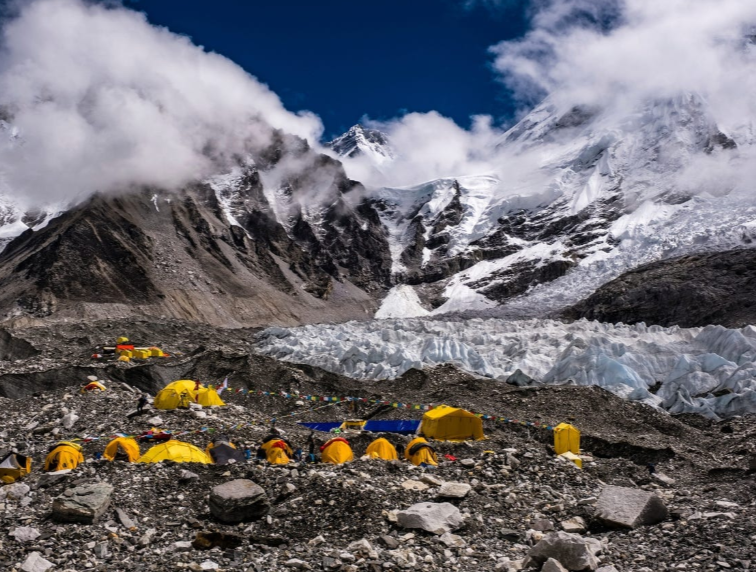
The Everest Base Camp Trek is often considered a physical and spiritual ‘life challenge’; others see it as a pilgrimage to visit the resting place of their relatives who could never visit the Khumbu region during their lifetime.” But beyond the snow-line trails and soaring peaks, there’s another dimension of the trek that many trekkers don’t get: its spiritual richness. The great trek to the foot of Mount Everest that takes you through Nepal’s most beautiful and sacred places is where you encounter ancient monasteries, ‘lung rick’ (Prayer flags) and Ganesh (mud wall built round chapels) that hold immense religious significance for the local Sherpa based Buddhists who aim to maintain such a treasure trove of religion monuments for generations to come.
If you take your time (and you should) and soak it all up, the Everest Base Camp trek is every bit as much of a spiritual journey as it is a trek. For in every village, every prayer wheel, every mumbled mantra is a treasure of devotion, peace, and oneness. And although you may just be thinking about getting to EBC or B or wherever you are going as you trudge up, the spirit one encounters on the trail can easily be what you take home.
Begin with the Sherpa Culture
You will quickly learn as you start your trek, presumably in Lukla, that this is a region not of mountains but of people, a few thousand souls struggling and thriving amidst these heights. The Sherpa are a famously hardy people, tough enough even over the mountain sense, but also one of the most spiritual on earth, with their brand of Buddhism wrapped around their daily lives. Coming near and starting your Everest Base Camp Trek itinerary, the trek is decorated with well-carved mani stones and colourful prayer flags flapping throughout ridges, and you’ll even listen to chants from the monasteries of the villages.
The more you apprehend and recognize that culture, the extra worthwhile your trek to Everest Base Camp is. Now, not only do you no longer have to hurry through the towns, Namche Bazaar, Tengboche, Pangboche, and Dingboche, but you ought to use the time to have homey conversations with the local people, to interrogate your manual, and to enjoy the rhythm of monastic life. They may be the sturdy, silent type, and their stoicism is a constant reminder of humility, moderation, and poise – values that weave into the mountains themselves.
Visit the Iconic Tengboche Monastery
Tengboche Monastery: that may be a non-secular pinnacle of the Everest Base Camp Trek Itinerary. Tengboche Monastery is the biggest and essential type of Monastery in the entire Khumbu region. This sacred spot, at 3,867 meters, is something more than a restoque — it’s a place to let the moment breathe and honor the mountains. The monastery — with Ama Dablam as its backdrop, not to mention pine forests in broad sweep all around — lures one with the invigorating vistas and the spiritual tranquility.
Join the morning prayers gathering at the monastery (or evenings, if your climb starts early), provided you are at Tengboche / Deboche and have spent a night around them in your Everest base camp trek packing list. It is virtually impossible not to be moved to tears by the monastic chanting delivered by monks in maroon robes inside the golden-lit prayer hall, and it is for many the spiritual heart of the Indochina trip. Even if you’re not Buddhist, that sense of peace in there is for everybody.
The Influence of Prayer Flags and Mani Stones
For the full Everest Base Camp Trek, you’ll be walking beneath bright prayer flags and alongside massive mani walls — stone walls carved with the Tibetan Buddhist mantra “Om Mani Padme Hum. These religious markers are not just ornaments — they are believed to spread prayers and blessings through the mountainscape on the blowing of the wind.
Hiking groups should go counterclockwise around the mani walls and should spin prayer wheels in the local direction. No matter how minor it can be, these rituals root you in the rhythm of the land and in connection to the alternative generations of pilgrims who also made their way to the shrine on foot.
The spiritual side of the Everest Base Camp Hike isn’t all about looking at; it is about participating, despite the fact that just in passing and recognition. Each time you encounter these sacred objects becomes a kind of reminder that you’re moving through a living spiritual landscape, not a picturesque trail.
Significant Acclima Days and the Climb of the Spirit
Most EBC Treks do have a couple of acclimatization days: typically, in Namche Bazaar and another in Dingboche. While you require these pit stops for your general well-being but these stops also make beautiful opportunities to explore the cultural and spiritual aspect of the journey in a bit more depth.
Visit the monasteries and the Sherpa Subculture Museum in Namche. In Dingboche, take a short stroll as much as the Nangkartshang Hermitage, a serene meditation retreat nestled in the hills above the village. These are moments that let you gradual down and reacquaint — not just with your breath, but with the historical non-secular traditions that for centuries have formed this region.
Trekking as a Moving Meditation
It’s a spiritual journey at the core, no matter the rest of it, the mailman or not. The monotony of walking, the focus on breathing, the quiet of the high trails — it doesn’t take many days on the circuit before the state of meditation consumes the trekkers without them even realizing it. If you ever find yourself pondering “ how much is it to walk the Everest Base Camp, ” then you should pay attention to this: The cost of climbing the Base Camp of Everest can be tallied in money and miles, but the real cost of the hike can be measured in headspace.
For maximum trekkers, the clearest and maximum non-violent moments are humble ones: looking at the dawn above the ice-encrusted peaks, taking a meal quietly in a tea house, placing one foot in advance of the opposite beneath a star-spangled sky. Should anybody come with spiritual intent or an open mind, the spiritual component of the trek is there for any and everyone who is willing to take it.
Final Thoughts: The Mountains Speak
The Everest Base Camp Trek is not most effective one of the most picturesque mountain sceneries in the world. To wander those trails is to wander throughout a sacred floor, a floor that has, over hundreds of years, been saturated with faith, with devotion, and with a profound connection to nature.
When you plan the trip of your lifetime, organizing your trek, which ranges from the Everest Base Camp trek to your EBC Trek cost and logistics, give some room for something else. Give yourself space to not just ascend but to hear. Let the voices of monks, the rustling of prayer flags, and he mountain silence speak to a part of you that is deeper than the surface.
For here in the Himalayas, a climb is a prayer and every vista a lesson in the vastness of life. You may come to the journey for the adventure, but be prepared to discover something bigger too — something spiritual waiting down near the base of Everest Base Camp.